
Over the past two decades, higher ed has seen an explosion in demand from students seeking a degree in Computer Science. The increased interest has largely been fueled by the rise of big tech and the common assumption that these degrees are a surefire way to land a high-paying job after graduation. In 2023, these degrees were so popular that some colleges and universities were struggling to accommodate the large numbers of incoming students.
However, over the past two years, there has been a drastic shift in Computer Science enrollment. It started in 2023-24, where MARKETview data shows there was more than 8% decline year-over-year (YOY) in deposit volumes across the Public, Private and Selective National cohorts. Then in this past cycle, we see an even larger drop-off. Those same three cohorts all saw more than a 25% reduction in deposit volumes YOY.
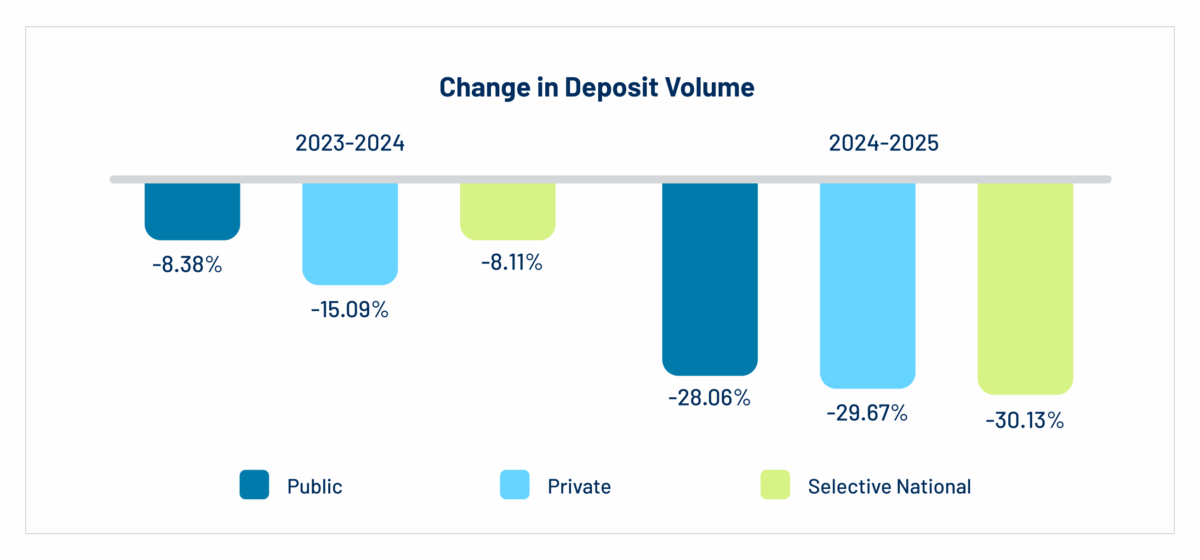
It’s difficult to pin down a specific reason for these declines. Between the rise of AI and highly publicized waves of big tech layoffs, there are a myriad of recent disruptions that could have caused this sudden change. One thing is for certain, though; students no longer view Computer Science as a good return on their college investment.
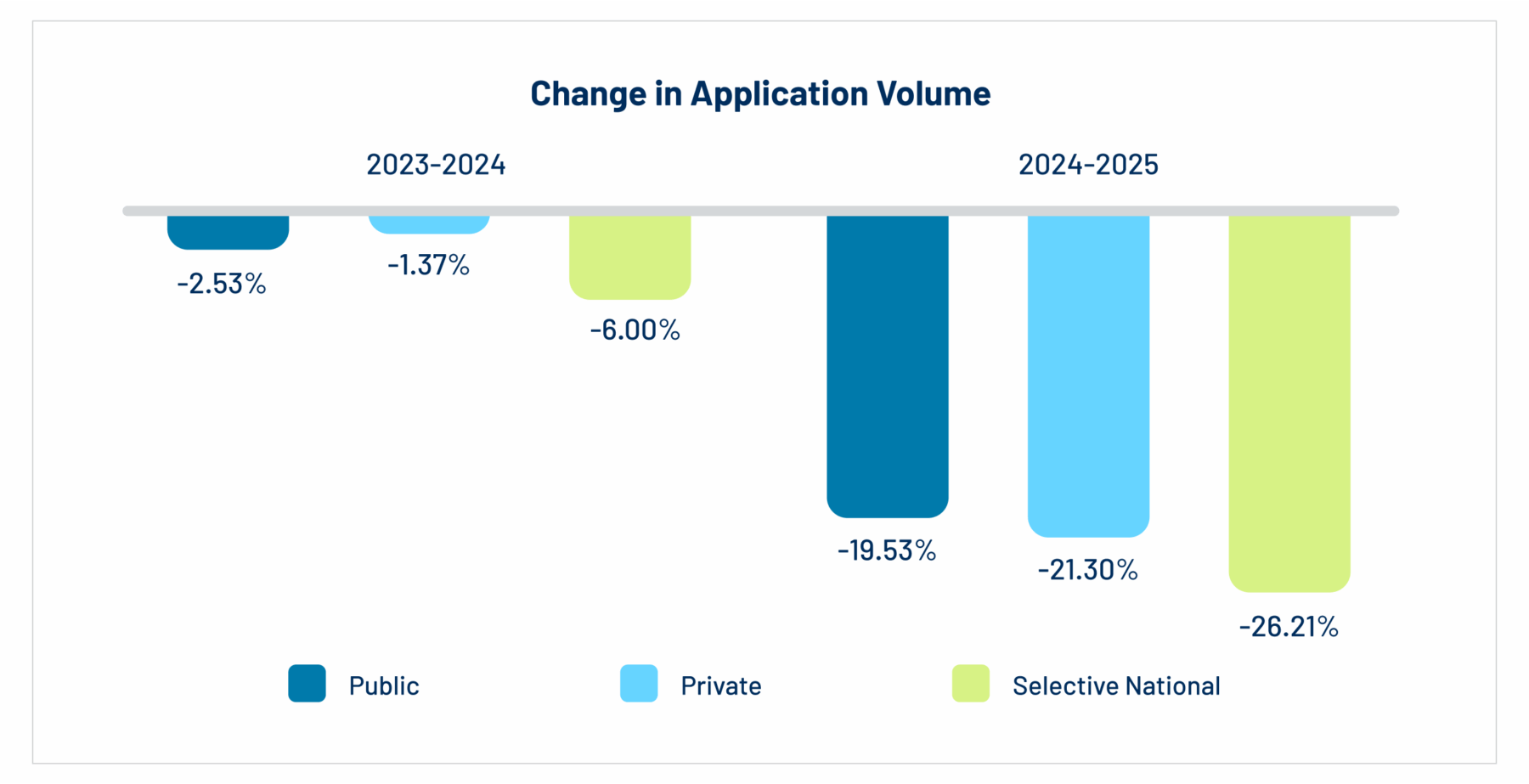
It’s not just deposits that are down, either. MARKETview data shows reductions across the entire enrollment pipeline for Computer Science. Application volumes took an especially sharp dip in 2024-25 compared to the previous cycle.
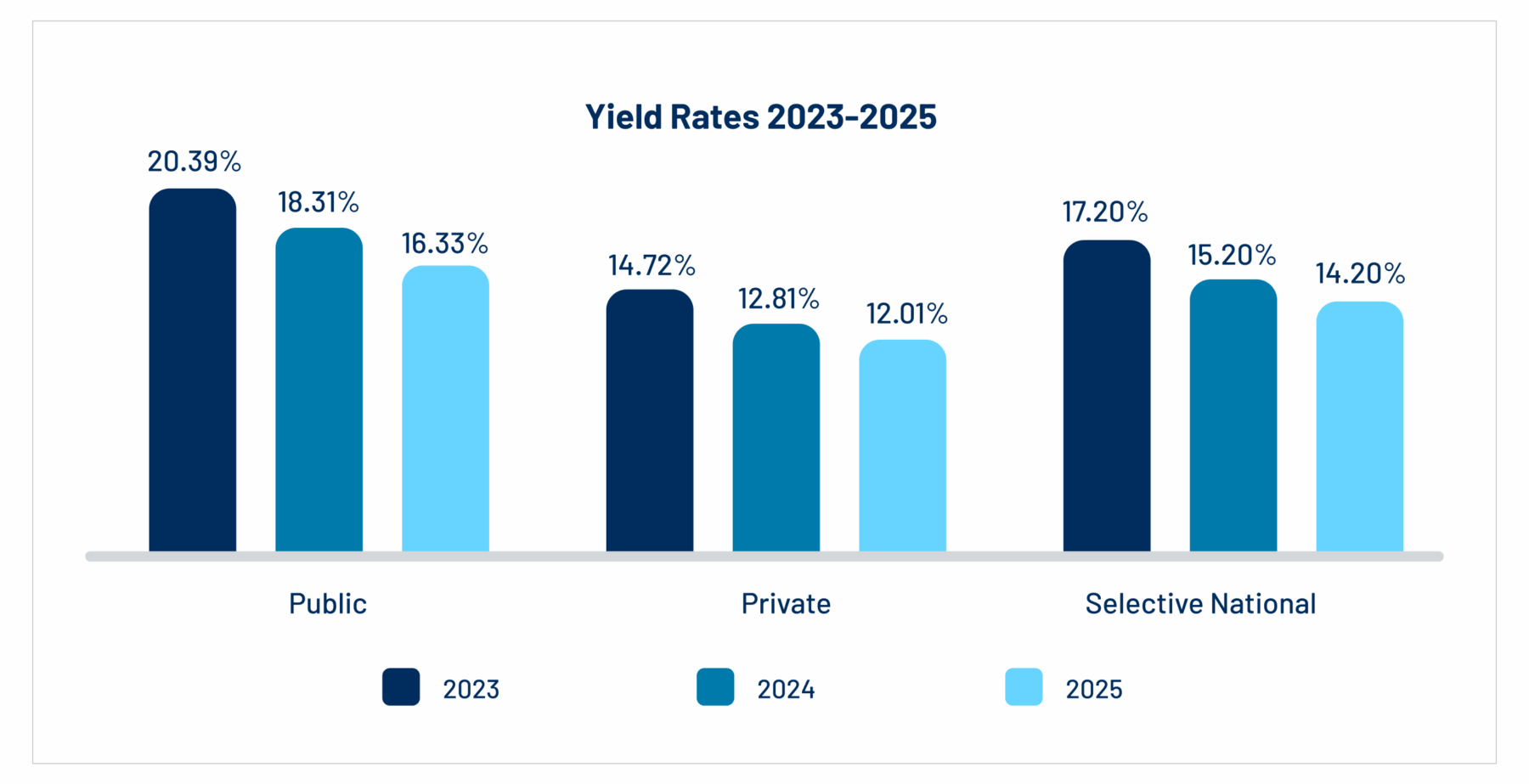
And yield has been steadily declining over the past two years as well, although the acceleration is not quite as drastic as with Applications and Deposits.
So, does this spell the end of Computer Science? Should colleges and universities start shrinking their programs? Not necessarily. Peter Farrell, Founding Principal at MARKETview, recounts another recent example of an academic interest taking a hit like this.
“Computer Science isn’t the only major to see changes in interest emerge,” Farrell said. “In the years that followed the pandemic, interest in Nursing saw a substantial downward swing, and is only starting to recover today.”
While Nursing did eventually start to see upward trends again in recent cycles, only time will tell how Computer Science will fare in the long run. The most apt way to tackle these sudden shifts in student behavior is to make sure your enrollment data can keep up. If you’re relying on outdated data, you’d be caught completely off guard when your Computer Science, or any other academic interest’s enrollment suddenly takes a hit. That’s why real-time, continuously monitored data is so critical for staying on your toes and preparing your strategy for the unexpected.
Farrell emphasizes the importance of this kind of flexibility when trying to keep up with constant disruption.
“One of the most important aspects of the long-term success of the American higher education sector is its ability to adapt,” Farrell said. “While colleges and universities may not be the most agile in adapting quickly, they have been amazingly creative in adapting to the changing interests of students over time. The colleges that can most quickly repackage their computer science offerings to become attractive again will surely have a market advantage.”
Chat with our team to see how MARKETview’s real-time data can keep you in the know throughout the enrollment cycle on the student populations that matter most to your goals.